Moving the Index Finger During Tashahhud
Fiqh discussion on whether the index finger be repeatedly moved during Tashahhud in prayer?
Sun Apr 12 2026
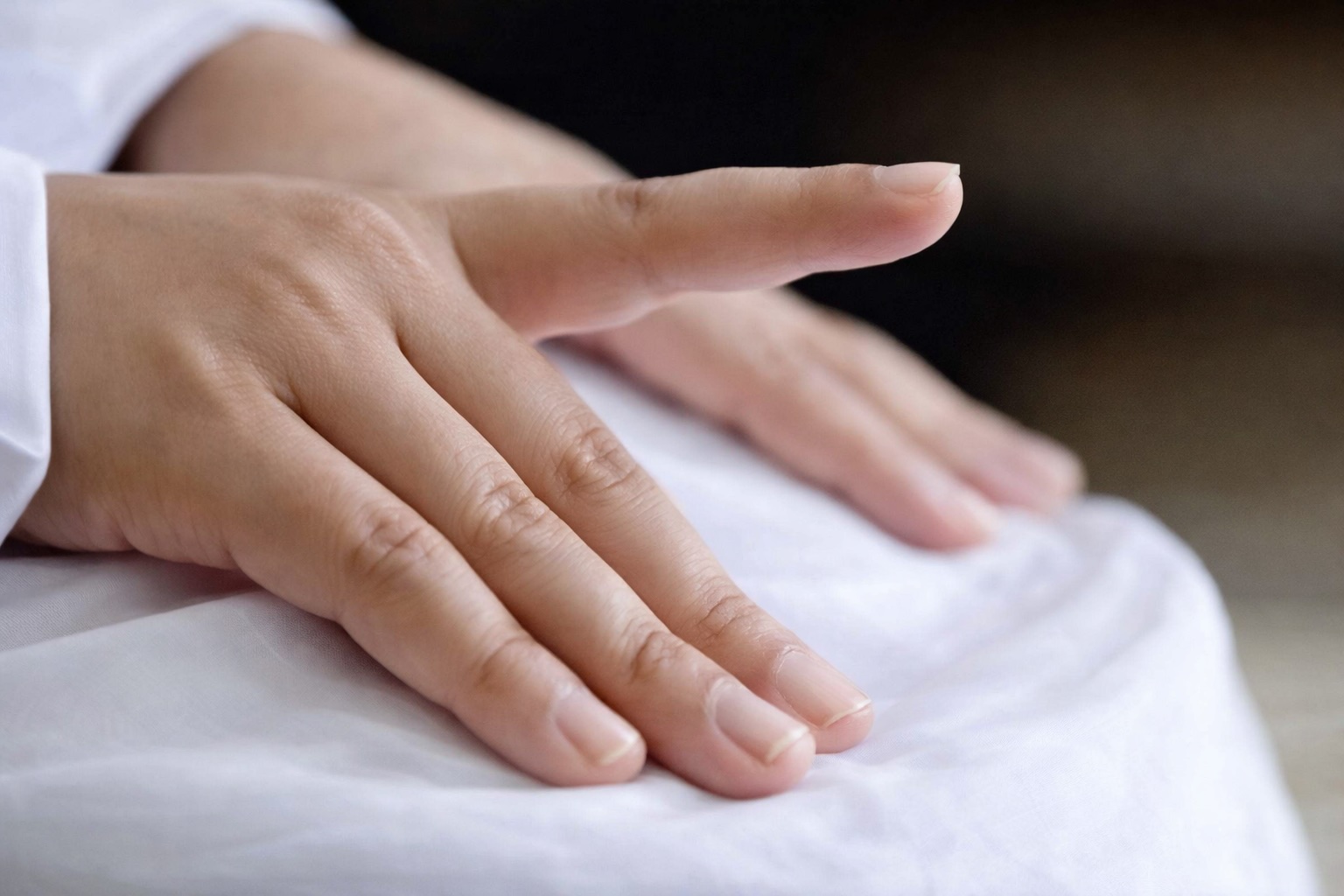
This article surveys the evidences and fiqh positions on moving the right index finger during Tashahhud. It finds no decisive authentic proof mandating repetitive movement; sound reports establish pointing, while additions both for and against movement are anomalous. The four Sunni schools agree on pointing but differ on movement. The article prefers pointing throughout without movement, dispels common misconceptions, and notes that differing practices do not invalidate the prayer.
Table of Contents
- Moving the Index Finger During Tashahhud
- Fiqh Differences Between Schools
- Hanafi Opinion
- Maliki Opinion
- Shafii Opinion
- Hanbali Opinion
- Conclusion from the Four Schools
- Summary of Opinions
- Common Misconceptions
- Evidences for the Different Opinions
- Those Who Say: Moving It Is Recommended
- Those Who Say: It Is Not Moved
- Those Who Say: The Finger Is Bent Slightly
- The Preponderant View
- Footnotes
Moving the Index Finger During Tashahhud
Source: Mawsuah Ahkam al-Salawat al-Khams by Dibyan al-Dibyan
Pointing with the finger does not necessarily entail moving it. No authentic hadith has been established either affirming or negating the movement of the finger during the Tashahhud.
If the method of movement is not understood from the statement "he raised his hands and supplicated with them," then the method cannot be understood from the hadith of b. Umar, "he raised his finger... and supplicated with it"[1] because movement requires both lowering and raising, unlike raising alone.
When praise precedes dua, it is considered part of the supplication itself. Raising the hands during supplication encompasses the supplication and its etiquettes, including glorification and sending blessings upon the Prophet ﷺ. Likewise, pointing during the Tashahhud, even if legislated for dua, encompasses the entire Tashahhud, because the Tashahhud consists of both praise and supplication.
The Prophet ﷺ said: "When one of you prays, let him begin by praising his Lord and glorifying Him, then let him send blessings upon the Prophet ﷺ, then let him supplicate with whatever he wishes."[2] The pointing encompasses all of this.
Fiqh Differences Between Schools
The jurists have differed regarding moving the index finger during the Tashahhud:
Hanafi Opinion
The index finger is raised when reaching the declaration of faith (Shahadah) in the Tashahhud raised at the word of negation (la ilaha, "there is no god") and lowered at the word of affirmation (illa Allah, "except Allah"), so that the raising signals negation and the lowering signals affirmation.[3]
Maliki Opinion
The Sunnah is to move it continuously throughout the entire Tashahhud. This was the position chosen by b. al-Qasim and explicitly stated by Khalil in his Mukhtasar; it was preferred by b. Rushd, and it is the relied-upon position in the madhab, and also a view among the Hanbalis.[4]
Shafii Opinion
The index finger is raised with a slight inclination so that it does not deviate from the direction of the qiblah, at the point of the hamzah in the word of affirmation (illa Allah). It is not lowered nor moved for the remainder of the Tashahhud — this is the position decisively held by the majority of Shafii scholars. If one were to move it, it would be disliked, but would not invalidate the prayer, as it is a minor action.[5]
It was also said: Moving it is forbidden, and if done the prayer is invalidated. This is one position within the Shafii madhab.[6]
It was also said: Moving it is recommended. This is another position within the Shafii madhab. Bayhaqi said: "It is possible that what is meant by moving is pointing with it, not repeating the movement."[7]
Hanbali Opinion
They say that one points with it when mentioning Allah alone, without moving the finger while pointing. This is the sound position of the madhab.[8]
It was also said: One points with it throughout the entire Tashahhud. This is a narration from Imam Ahmad, and a view in the Maliki madhab chosen by Ibn al-Arabi.[9] Ibn al-Arabi said: "Beware of moving your fingers during the Tashahhud. Do not pay attention to what is narrated in al-Utbiyyah, for it is a calamity…"[10] He added in Aridat al-Ahwadhi: "…How strange is the one who says: It is a mallet against Shaytan when moved. Know that if you move one finger against Shaytan, he will move ten against you. Shaytan is subdued only through sincerity, humility, and remembrance of Allah."[11]
Conclusion from the Four Schools
Thus, the four Imams are agreed upon the pointing, but differ regarding moving it, in two positions:
-
First: Moving it continuously throughout the Tashahhud — the position of the Malikis, and a weak view among the Shafiis.
-
Second: Pointing without moving, with disagreement among them as to whether one points throughout the Tashahhud or only at a specific moment within it. The unrestricted mention of pointing in the texts does not entail movement.
Summary of Opinions
| School | When to point | Movement policy |
|---|---|---|
| Hanafi | at “la ilaha”, lower at “illa Allah” | Single raising and lower at the two phrases and for it to not be continuous |
| Maliki | throughout the entire Tashahhud | Authorized Position: Continuous movement |
| Shafii | at “illa Allah” | Majority: Point with slight lowering throughout Tashahhud; Opinion 2: Moving is recommended |
| Hanbali | when mentioning Allah | Opinion 1: No movement when pointing; Opinion 2: Point throughout Tashahhud; Opinion 3: Continuous movement |
Common Misconceptions
-
Continuous movement in Tashahhud is established by a strong Sunnah: The key proof rests on the addition “moving it, supplicating with it,” which is a shadh (anomalous) addition and cannot stand against the stronger routes without it.
-
Slightly bending the finger is a Sunnah: The report supporting bending is weak and cannot establish a Sunnah.
-
Moving the finger repels Shaytan: This claim is sharply criticized by Ibn al-Arabi; no sound marfu proof establishes it.
-
Moving or not moving invalidates the prayer: Invalidation is at most a minority view reported among Shafiis; the dominant positions across schools do not invalidate, and many only deem movement disliked at most.
-
A specific motion pattern (right–left or up–down) is mandated: These are descriptive options within Maliki discussions and not binding across schools; even within Malikis there is variance.
-
There is decisive proof of prohibition of movement: That negation is a shadh (anomalous) addition in the route of b. Jurayj from Ziyad b. Saad and is not decisive against the stronger parallel routes.
-
Movement means repetitive motion: Some scholars (e.g. Bayhaqi) understood such phrasing to possibly mean pointing and not repeated motion; treating it as mandatory repetitive movement lacks firm basis.
Evidences for the Different Opinions
Those Who Say: Moving It Is Recommended
What Ahmad narrated via the chain of Zaidah: "I said to myself: Let me observe how the Messenger of Allah ﷺ prays. He said: I watched him stand up and say the takbir, raising his hands until they were level with his ears. Then he placed his right hand over the back of his left hand, wrist, and forearm…" He continued: "…Then he sat down and spread out his left leg, placing his left palm on his left thigh and knee, making the edge of his right elbow rest on his right thigh. Then he closed his fingers, forming a circle. Then he raised his finger, and I saw him moving it, supplicating with it. Then I came back at another time when the weather was cold, and I saw the people moving their hands from under their garments due to the cold."[12]
[The addition "moving it, supplicating with it" was narrated solely by Zaidah from Asim, and it is a shadh (anomalous) addition.][13]
Those Who Say: It Is Not Moved
First Evidence
What Muslim narrated via the chain of Malik, from Muslim b. Abi Maryam, from Ali b. Abd al-Rahman al-Muawi, who said: "Abdullah b. Umar saw me toying with pebbles during the prayer. When he finished, he forbade me from doing so and said: Do as the Messenger of Allah ﷺ used to do. I said: And what did the Messenger of Allah ﷺ do? He said: When he sat in the prayer, he would place his right palm on his right thigh and close all his fingers, and point with the finger adjacent to the thumb, and place his left palm on his left thigh."[14]
Abu Awanah titled the relevant chapter in his Mustakhraj: "Clarification of Pointing with the Index Finger toward the Qiblah, Directing the Gaze toward It, and Refraining from Moving It during the Pointing." Thus, pointing does not require moving the finger.
Second Evidence
What Muslim narrated via the chain of Ubaydullah b. Umar, from Nafi, from b. Umar: "When the Prophet ﷺ sat in the prayer, he would place his hands on his knees, raise his right index finger adjacent to the thumb, and supplicate with it, while his left hand was spread flat on his left knee."[15]
The expression "he raised his finger… and supplicated with it": raising does not entail moving, because moving involves both lowering and raising. This is why scholars agree that if someone said "he raised his hands while supplicating," no one would understand that to mean raising combined with repeated lowering.
Nor do I understand from "supplicated with it" that the finger is raised only during the actual phrases of supplication because the Tashahhud in its entirety is supplication, and whatever precedes the supplication in the form of praise is part of its etiquettes. Just as one raises the hands when supplicating Allah even if beginning with words of glorification and magnification, then sending blessings upon the Prophet ﷺ, and then mentioning ones needs. So too is the entire Tashahhud is supplication, and the glorification and blessings upon the Prophet ﷺ are preludes to the supplication and thus part of it. That is why the Prophet ﷺ said: "When one of you prays (i.e., make dua), let him begin by praising his Lord and glorifying Him, then let him send blessings upon the Prophet ﷺ, then let him make dua with whatever he wishes."[2:1]
Third Evidence
What Muslim narrated: Abu Bakr b. Abi Shaybah narrated to us; Abu Khalid al-Ahmar narrated to us; from Ibn Ajlan, from Amir b. Abdullah b. al-Zubayr, from his father, who said: "When the Messenger of Allah ﷺ sat in supplication, he would place his right hand on his right thigh and his left hand on his left thigh, point with his index finger, place his thumb on his middle finger, and cup his left palm over his knee."[16]
Abu Dawud also narrated it via Hajjaj, from Ibn Jurayj, from Ziyad, from Muhammad b. Ajlan, from Amir b. Abdullah, from Abdullah b. al-Zubayr, who stated: "The Prophet ﷺ used to point with his finger when supplicating, and he did not move it."[17]
[The addition "and he did not move it" is a shadh (anomalous) addition.][18]
Those Who Say: The Finger Is Bent Slightly
First Evidence
What Abu Dawud narrated via the chain of Uthman, meaning b. Abd al-Rahman, from Isam b. Qudamah of the Bajilah tribe, from Malik b. Numayr al-Khuzai, from his father, who said: "I saw the Prophet ﷺ placing his right forearm on his right thigh, raising his index finger, having bent it slightly."[19] [Weak.][20]
Second Evidence
Inclining the finger slightly ensures it remains directed toward the qiblah without deviating from it.
The Preponderant View
The preponderant position is that the one praying points with the index finger throughout the entire Tashahhud, without moving it. And Allah knows best.
Footnotes
«أَنَّ النَّبِيَّ ﷺ كَانَ إِذَا جَلَسَ فِي الصَّلاَةِ وَضَعَ يَدَيْهِ عَلَى رُكْبَتَيْهِ وَرَفَعَ إِصْبَعَهُ الْيُمْنَى الَّتِي تَلِي الإِبْهَامَ فَدَعَا بِهَا وَيَدَهُ الْيُسْرَى عَلَى رُكْبَتِهِ الْيُسْرَى بَاسِطُهَا عَلَيْهَا» (مسلم ٥٨٠a صحيح)Ibn Umar: that the Prophet ﷺ, when he sat in prayer (in tashahhud), would place his hands on his knees and raise his right finger next to the thumb, making dua with it, and he would place his left hand on his left knee, spreading it over it. ↩︎
«إِذَا صَلَّى أَحَدُكُمْ فَلْيَبْدَأْ بِتَحْمِيدِ رَبِّهِ جَلَّ وَعَزَّ وَالثَّنَاءِ عَلَيْهِ، ثُمَّ يُصَلِّي عَلَى النَّبِيِّ ﷺ، ثُمَّ يَدْعُو بَعْدُ بِمَا شَاءَ».» (أبو داود ١٤٨١ صحيح)If any of you prays, he should mention the exaltation of his Lord in the beginning and praise Him; he should then invoke blessings on the Prophet ﷺ; thereafter he should make dua Allah for anything he wishes. ↩︎ ↩︎
al-Tahtawis gloss on Maraqi al-Falah (p. 270); Minhat al-Khaliq, gloss on al-Bahr al-Raiq (1/342); Ibn Abidins gloss (1/508); al-Nahr al-Faiq (1/220); al-Durr al-Mukhtar Sharh Tanwir al-Absar (p. 70). ↩︎
The Malikis differed both on the location of the movement and its description. Regarding location: it was said the finger is moved throughout the entire Tashahhud. Dasuqi noted that this apparently excludes moving it after the Tashahhud during the supplication and blessings upon the Prophet ﷺ yet what is consistent with their stated rationale (that it reminds the worshipper of the state of prayer so that Shaytan does not cause distraction) is that it is moved continuously until the salam. Another view holds that it is moved only at the two declarations of faith; b. Hajib gave this view precedence, and apparently considered it the well-known position.
In Jami al-Ummahat (pp. 98-99): "He points with it at the declaration of monotheism; and it was said: continuously; and it was said: he does not move it."
Regarding the description of the movement: it was said right and left; it was said upward and downward; al-Fawakih al-Dawani mentioned that the choice is open. The first view is the relied-upon position in the madhab. Khalil said (p. 33): "Moving it continuously." Kharshi commented in his Sharh (1/288): "Right and left." Dasuqi (1/251) said: "That is, not upward nor downward, meaning not above and below as some said." In al-Fawakih al-Dawani (1/192): "He points with it, i.e., raises it, moving it right and left or from below to above and vice versa."
See also: Minh al-Jalil (1/263); al-Taj wa al-Iklil (2/249); al-Kharshi (1/288); Sharh al-Zarqani ala Mukhtasar Khalil (1/380); al-Thamar al-Dani (p. 127); Sharh b. Naji ala al-Risalah (1/155). ↩︎
Tuhfat al-Muhtaj (2/80); Mughni al-Muhtaj (1/378); al-Majmu (3/454); al-Wasit (2/146). ↩︎
al-Majmu (3/454). ↩︎
al-Majmu (3/454). ↩︎
al-Insaf (2/76); Kashshaf al-Qina (1/392); al-Iqna (1/136); Sharh Muntaha al-Iradat (1/200). ↩︎
al-Insaf (2/76); Jami al-Ummahat (p. 99); al-Madhab fi Dabt Masail al-Madhab (1/258); al-Mukhtasar al-Fiqhi of b. Arafah (p. 265); Sharh b. Naji ala al-Risalah (1/155); al-Shamil fi Fiqh al-Imam Malik (1/110). ↩︎
al-Mukhtasar al-Fiqhi of b. Arafah (1/265); Lawami al-Durar fi Hatk Astar al-Mukhtasar (2/144). ↩︎
Aridat al-Ahwadhi (2/85-86). ↩︎
«ثُمَّ قَعَدَ، فَافْتَرَشَ رِجْلَهُ الْيُسْرَى، فَوَضَعَ كَفَّهُ الْيُسْرَى عَلَى فَخِذِهِ وَرُكْبَتِهِ الْيُسْرَى، وَجَعَلَ حَدَّ مِرْفَقِهِ الْأَيْمَنِ عَلَى فَخِذِهِ الْيُمْنَى، ثُمَّ قَبَضَ بَيْنَ أَصَابِعِهِ، فَحَلَّقَ حَلْقَةً، ثُمَّ رَفَعَ إِصْبَعَهُ، فَرَأَيْتُهُ يُحَرِّكُهَا يَدْعُو بِهَا. ثُمَّ جِئْتُ بَعْدَ ذَلِكَ فِي زَمَانٍ فِيهِ بَرْدٌ، فَرَأَيْتُ النَّاسَ عَلَيْهِمُ الثِّيَابُ، تُحَرَّكُ أَيْدِيهِمْ مِنْ تَحْتِ الثِّيَابِ مِنَ الْبَرْدِ.» (أحمد ١٨٨٧٠ صحيح)Then he sat, laying his left foot flat and sitting on it. He placed his left palm on his left thigh and knee, and placed the edge of his right elbow on his right thigh. Then he clasped his fingers, making a ring, then he raised his finger, and I saw him moving it, supplicating with it. Then I came after that at a time when it was cold, and I saw the people wearing clothes; their hands were moving beneath the clothes because of the cold. ↩︎
There is disagreement among the narrators of this hadith from Asim b. Kulayb. Zaidah b. Qudamah narrated from Asim and included the addition "moving it and supplicating with it," along with other additional wordings not relevant here. However, every other narrator who transmitted from Asim b. Kulayb, chief among them: Shubah, al-Thawri, Ibn Uyaynah, Bishr b. al-Mufaddal, b. Idris, and Abu al-Ahwas, reaching around twenty individuals, none of them mentioned this wording. There is therefore no doubt that this addition in the narration of Zaidah is shadh (anomalous). The chains of this hadith were compiled previously; see H (1247). ↩︎
«رَآنِي عَبْدُ اللَّهِ بْنُ عُمَرَ وَأَنَا أَعْبَثُ بِالْحَصَى فِي الصَّلاَةِ فَلَمَّا انْصَرَفَ نَهَانِي فَقَالَ اصْنَعْ كَمَا كَانَ رَسُولُ اللَّهِ ﷺ يَصْنَعُ فَقُلْتُ وَكَيْفَ كَانَ رَسُولُ اللَّهِ ﷺ يَصْنَعُ قَالَ كَانَ إِذَا جَلَسَ فِي الصَّلاَةِ وَضَعَ كَفَّهُ الْيُمْنَى عَلَى فَخِذِهِ الْيُمْنَى وَقَبَضَ أَصَابِعَهُ كُلَّهَا وَأَشَارَ بِإِصْبَعِهِ الَّتِي تَلِي الإِبْهَامَ وَوَضَعَ كَفَّهُ الْيُسْرَى عَلَى فَخِذِهِ الْيُسْرَى» (مسلم ٥٨٠c صحيح)Abdullah b. Umar saw me while I was fiddling with pebbles during the prayer. When he finished, he forbade me and said, “Do as the Messenger of Allah ﷺ used to do.” I said, “And how did the Messenger of Allah ﷺ used to do?” He said, “When he sat in the prayer, he would place his right hand on his right thigh, clench all his fingers, and gesture with the finger next to the thumb; and he would place his left hand on his left thigh.” ↩︎
«أَنَّ النَّبِيَّ ﷺ كَانَ إِذَا جَلَسَ فِي الصَّلاَةِ وَضَعَ يَدَيْهِ عَلَى رُكْبَتَيْهِ وَرَفَعَ إِصْبَعَهُ الْيُمْنَى الَّتِي تَلِي الإِبْهَامَ فَدَعَا بِهَا وَيَدَهُ الْيُسْرَى عَلَى رُكْبَتِهِ الْيُسْرَى بَاسِطُهَا عَلَيْهَا» (مسلم ٥٨٠a صحيح)that the Prophet ﷺ, when he sat in prayer (in tashahhud), would place his hands on his knees and raise his right finger next to the thumb, making dua with it, and he would place his left hand on his left knee, spreading it over it. ↩︎
Sahih Muslim; also in Musannaf b. Abi Shaybah (8441, 29680).
«كَانَ رَسُولُ اللَّهِ ﷺ إِذَا قَعَدَ يَدْعُو وَضَعَ يَدَهُ الْيُمْنَى عَلَى فَخِذِهِ الْيُمْنَى وَيَدَهُ الْيُسْرَى عَلَى فَخِذِهِ الْيُسْرَى وَأَشَارَ بِإِصْبَعِهِ السَّبَّابَةِ وَوَضَعَ إِبْهَامَهُ عَلَى إِصْبَعِهِ الْوُسْطَى وَيُلْقِمُ كَفَّهُ الْيُسْرَى رُكْبَتَهُ» (مسلم ٥٧٩b صحيح)When the Messenger of Allah ﷺ sat to make dua (in tashahhud), he placed his right hand on his right thigh and his left hand on his left thigh, and pointed with his forefinger, and placed his thumb on his (milddle) finger, and covered his knee with the palm of his left hand.. ↩︎
«أَنَّ النَّبِيَّ ﷺ كَانَ يُشِيرُ بِأُصْبُعِهِ إِذَا دَعَا وَلاَ يُحَرِّكُهَا» (أبو داود ٩٨٩ لا نعرف حكم له)The Prophet ﷺ used to point with his finger and he would not move it. ↩︎
The negation of movement was narrated solely by b. Jurayj from Ziyad b. Sad. b. Uyaynah narrated it from Ziyad b. Sad, from Amir, without any mention of movement. Likewise, b. Uyaynah, al-Layth b. Sad, Sulayman b. Bilal, Abu Khalid al-Ahmar, Rawh b. al-Qasim, Wuhayb b. Khalid, and Zayd b. Hibban al-Raqqi all narrated it from b. Ajlan, from Amir b. Abdillah b. al-Zubayr, without any mention of movement — further confirming that what b. Jurayj narrated from Ziyad b. Sad is anomalous (shadh). b. Jurayj — or the narrator from him — made two errors: one in the chain and one in the text.
As for the error in the chain: he inserted an intermediary between Ziyad b. Sad and Amir b. Abdillah b. al-Zubayr.
As for the error in the text: Ziyad added "and he did not move it," while every other narrator transmitting from Ziyad b. Sad or from b. Ajlan from Amir from his father did not include this phrase. It appears the narrator may have added it as an interpretive gloss — since pointing does not require movement — and mistakenly incorporated it into the text itself.
The hadith was transmitted by Ziyad b. Sad, with disagreement among those narrating from him. b. Jurayj narrated from Ziyad b. Sad — from Muhammad b. Ajlan — from Amir b. Abdillah — from his father Abdullah b. al-Zubayr — with the addition "and he did not move it." This was recorded by Abu Dawud (989), al-Nasai in al-Mujtaba (1270) and al-Kubra (1194), al-Bazzar (2204, 2205), Abu Awanah in his Mustakhraj (2019), al-Tabarani in al-Mujam al-Kabir (13/99, H. 238) and (14/200, H. 14821) and in al-Dua (638), b. Abi Asim in al-Ahad wa al-Mathani (589), and al-Bayhaqi in al-Sunan al-Kubra (2/189) — all via Hajjaj b. Muhammad, who said: b. Jurayj stated: "Ziyad informed me, from Muhammad b. Ajlan, from Amir" — and mentions the hadith. b. Jurayj added: "Amr b. Dinar also said: Amir informed me, from his father, that he saw the Prophet ﷺ supplicating in this manner, and the Prophet ﷺ leaning his left hand on his left thigh." Thus he inserted an intermediary between Ziyad b. Sad and Amir b. Abdillah, and I do not know whether the error originated with b. Jurayj or with his narrator Hajjaj b. Muhammad.
As for b. Uyaynahs narration: Hamid b. Yahya (al-Balkhi), as recorded in al-Ahad wa al-Mathani of b. Abi Asim (588), narrated: "Sufyan b. Uyaynah informed us from Ziyad b. Sad, from Amir b. Abdillah b. al-Zubayr, from his father, who said: I saw the Messenger of Allah ﷺ sitting in prayer and pointing with his index finger." b. Uyaynahs narration thus differs from b. Jurayjs both in chain and text: in text, there is no mention of negating movement; in chain, there is no intermediary inserted between Ziyad b. Sad and Amir b. Abdillah b. al-Zubayr — which is the preserved version, as Ziyad b. Sad narrates from Amir directly.
Abu al-Walid al-Tayalisi, as in the Sunan of al-Darimi (1377), and Abu Khaythamah Zuhayr b. Harb, as in Musnad Abi Yala (6806), both narrated from b. Uyaynah, from b. Ajlan, from Amir b. Abdillah b. al-Zubayr, from his father — with the wording: "I saw the Messenger of Allah ﷺ supplicating thus," and he pointed with the index finger. Abu Yalas wording is as stated; al-Darimis wording reads: "Ibn Uyaynah pointed with his finger, and Abu al-Walid pointed with the index finger."
Both chains are sound. Imam Ahmad and al-Humaydī narrated from b. Uyaynah and combined both of his teachers, indicating that both chains are sound from them — and Ahmad and al-Humaydī are among the most reliable of b. Uyaynahs students.
Imam Ahmad (4/3) recorded: "It was read to Sufyan while I was present: I heard b. Ajlan and Ziyad b. Sad, from Amir b. Abdillah b. al-Zubayr, from his father, who said: I saw the Prophet ﷺ supplicating thus" — and b. al-Zubayr made a gesture.
al-Humaydī (903) recorded: "Sufyan narrated to us — Ziyad b. Sad and Muhammad b. Ajlan narrated to us — that they both heard Amir b. Abdillah b. al-Zubayr narrating from his father that he saw the Messenger of Allah ﷺ supplicating in the prayer thus." al-Humaydī then closed his four fingers and pointed with the index finger.
This concludes the analysis of the disagreement regarding the narration of Ziyad b. Sad.
A group of narrators transmitted it from b. Ajlan, from Amir, without including the phrase "he did not move it." Among them: b. Uyaynah, al-Layth b. Sad, Sulayman b. Bilal, Abu Khalid al-Ahmar, Rawh b. al-Qasim, Wuhayb b. Khalid, and others. The chains for these narrations have been referenced previously; see H (1228) to avoid repetition. ↩︎
«رَأَيْتُ النَّبِيَّ ﷺ وَاضِعًا ذِرَاعَهُ الْيُمْنَى عَلَى فَخِذِهِ الْيُمْنَى رَافِعًا أُصْبُعَهُ السَّبَّابَةَ قَدْ حَنَاهَا شَيْئًا» (أبو داود ٩٩١ ضعيف)I saw the Prophet (peace be upon him placing his right hand on his right thigh and raising his forefinger curving it a little. ↩︎
This hadith has two defects. The first: the unknown status of Malik b. Numayr al-Khuzai. Only Isam b. Qudamah narrated from him, and he has only this one hadith to his name, which contains this rejected addition that he alone transmitted. The second defect: disagreement among narrators regarding Isam b. Qudamah.
Yahya b. Adam, as in Musnad Ahmad (3/471), and Uthman b. Abd al-Rahman (al-Harrani al-Taraifi), as in Sunan Abi Dawud (991), and Abu Nuaym (al-Fadl b. Dukayn), as in al-Mujtaba of al-Nasai (1274), al-Kubra (1198), Sahih b. Khuzaymah (716), al-Dua of al-Tabarani (636), al-Awsat of b. al-Mundhir (3/216), al-Sunan al-Kubra of al-Bayhaqi (2/189), and Marifat al-Sahabah of Abu Nuaym (6433) and al-Tabaqat al-Kubra of b. Sad (7/62), and Abdullah b. al-Mubarak as in al-Ahad wa al-Mathani of b. Abi Asim (2330), and Shuayb b. Harb as in Sahih b. Hibban (1964), and Muhammad b. Yusuf al-Firyabi as in al-Tarikh al-Kabir (8/116): all narrated it without mentioning any bending of the finger.
However, the following narrators all contradicted them in their narration from Isam b. Qudamah: Waki, as in Musannaf b. Abi Shaybah (8439, 29680), his Musnad (554), Musnad al-Imam Ahmad (3/471), Sunan b. Majah (911), al-Ahad wa al-Mathani of b. Abi Asim (2329), and Hilyat al-Awliya (8/373); al-Muafa b. Imran, as in al-Mujtaba of al-Nasai (1271) and al-Kubra (1195); Abdullah b. Numayr as in Sahih b. Khuzaymah (715); Isa b. Yunus as in Mujam al-Sahabah of b. Qani (3/170); and Abu Ahmad al-Zubayri as in Tarikh Asbahan (2/310) all narrated from Isam b. Qudamah without mentioning the bending of the finger, confining themselves to pointing with the index finger as in other hadiths which is the established narration.
The disagreement originates with Isam b. Qudamah. He is generally acceptable, though he frequently narrates from weak and unknown transmitters as is the case here, since Malik b. Numayr al-Khuzai is known only through Isam b. Qudamah and has only this single hadith to his name. And Allah knows best. ↩︎
Sign in from the top menu to add or reply to reflections.