Changing Your Spot After the Prayer
Separating the fard from nafl by moving or speaking after prayer with evidence and scholarly views
Sun Apr 12 2026
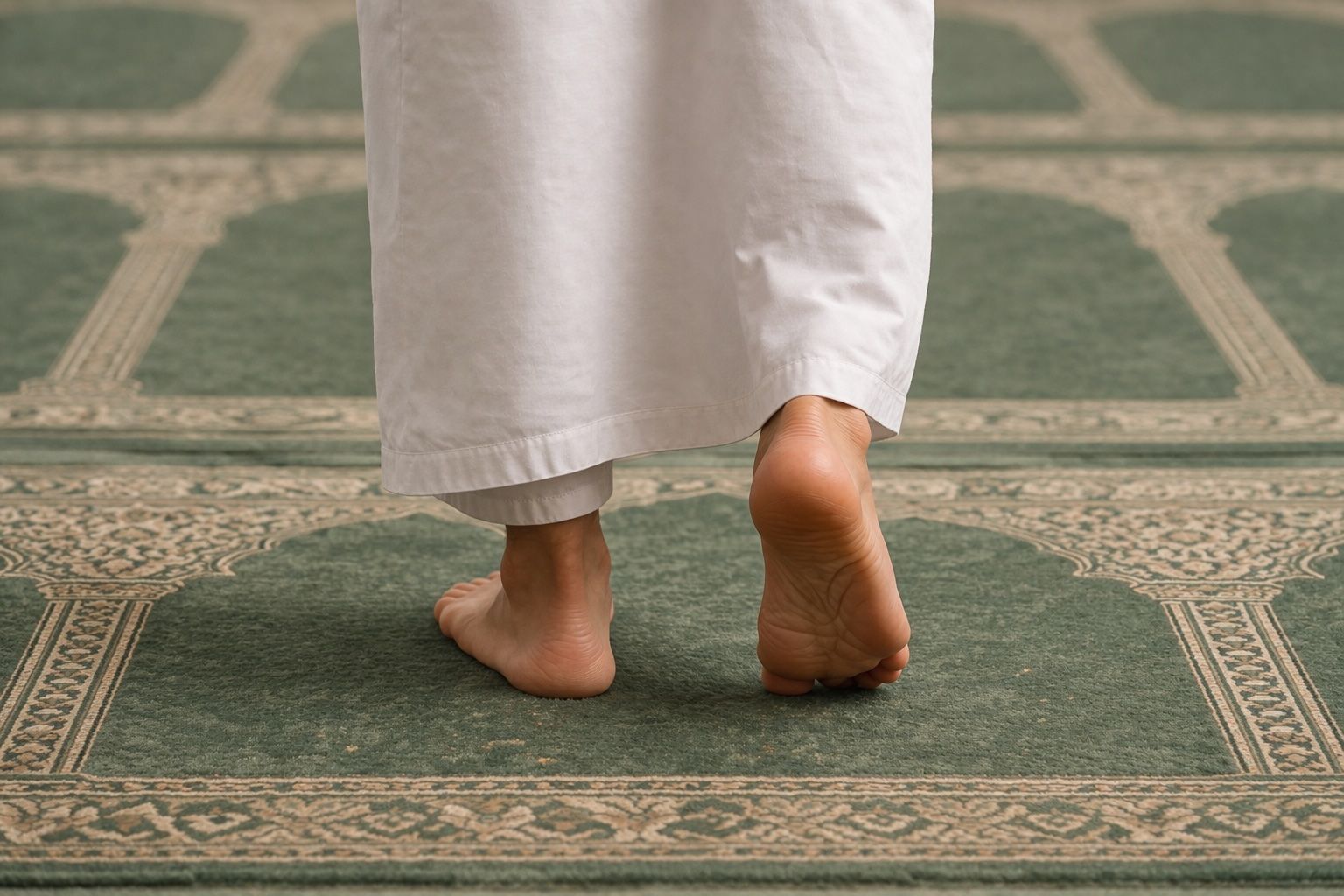
Why Do We Change Our Spot After the Fard Prayer?
If you have prayed in a masjid with any regularity, you have probably noticed people shifting their position after the fard prayer before starting their sunnah rakaat. Maybe you do it yourself. Ask someone why, and the most common answer you will hear is: "So that each spot of the earth becomes a witness for you on the Day of Judgment." It is a beautiful reason. But is that actually the primary reason? And where does it even come from? Let's explore.
Table of Contents
- Why Do We Change Our Spot After the Fard Prayer?
- The Reason and What It Actually Applies To
- Fiqh Positions
- Evidence from the Sunnah
- Scholarly Opinions
- A Note on Disagreement
- Summary
The Reason and What It Actually Applies To
There are two reasons scholars give for this practice, and the one most people cite is actually the secondary one.
-
The primary reason is to distinguish the fard prayer from the nafl prayer. You want there to be a clear, visible break between your obligatory prayer and your voluntary one, so that the two are not blurred together into one continuous act. Think of it like reciting the Basmalah between two surahs because it marks the end of one and the beginning of the next. The separation here serves the same function: it makes clear that the fard has ended, no additional rakahs of the fard are being prayed, and something new is beginning.
-
The secondary reason, and the one people more commonly mention, is to multiply the spots on earth that will bear witness for you on the Day of Judgment.
Both reasons are valid. Understanding that the primary reason is about separation has a very practical implication. The separation ensures that neither you nor anyone around you gets the impression that you are adding rakaat to your fard prayer. Beyond that, it serves as a mental reset, a deliberate pause that closes one act of worship and opens another. This is especially helpful for those who struggle with waswas (religious scrupulosity or OCD-like doubts), where uncertainty about the number of rakaat prayed or the boundary between fard and nafl can become a real source of anxiety. The good news is that the bar is low: say a few words to someone nearby, or simply shift your position a little. Either one is enough to achieve the separation the Prophet ﷺ recommended.
It is also worth being clear about what this practice is not necessarilly about repositioning between individual sets of a nafl prayer. So if you pray the four rakaat sunnah before Zuhr as two separate sets of two rakaat, there is little reason to shift between those two sets. The movement matters at the fard-to-nafl boundary, not within the rakaat of extra nawafil themself.
By the same token, Tarawih is an entirely different situation. Whether you pray eight rakaat or twenty or any other number, followed by the three rakaat of Witr, Tarawih is one continuous prayer and a part of Qiyam al-Layl. You can remain in the same spot throughout the entire night's prayer without any issue.
Fiqh Positions
Imam al-Jaziri, in his al-Fiqh ala al-Madhahib al-Arbaah, summarizes how each of the four madhabs approached this question:
-
Hanafis distinguish between the imam and the follower. For the imam, it is makruh (disliked) to remain in his spot after the fard prayer and pray his nafl there. As for the follower in the congregation, he may pray his nafl in the same spot where he prayed the fard, or he may move — neither is blameworthy. However, it is considered better for the follower to move.
-
Shafiis hold that it is recommended (sunnah) for anyone who has just completed the fard prayer to move from his spot before beginning the nafl. If moving is not possible due to crowding or similar circumstances, it is recommended that he say a brief word that falls outside the actions of the prayer, such as saying "I have completed the obligatory prayer" — and then begin his nafl.
-
Malikis make a distinction between types of nafl prayer. For the regular sunnah prayers, those tied to the obligatory prayers, it is actually preferable to pray them in the masjid, whether in the same spot as the fard or in a different one. For non-regular voluntary prayers, such as Salat al-Duha, it is preferable to pray them at home. An exception is made for the Masjid of the Prophet ﷺ in Madinah, where it is recommended for those present to pray their nafl in the spot where the Prophet ﷺ used to pray, i.e. in front of the mihrab beside the minbar in the center of the masjid.
-
Hanbalis hold that praying the regular sunnah prayers and other nafl prayers at home is preferable in all cases, except for prayers that are legislated to be performed in congregation. If a person does pray them in the masjid, he may do so either in the same spot as the fard or in a different one.
What emerges from looking at all four schools together is a broad agreement on the underlying principle: some form of separation between fard and nafl is good, and praying nafl at home is generally the better choice. The differences are in the details and how strongly the movement is emphasized, and whether it is required or merely preferred.
Evidence from the Sunnah
First Evidence
The foundational evidence for this practice comes from Sahih Muslim. Nafi b. Jubayr sent a man to ask al-Saib b. Ukht Namir about something Muawiyah had seen him do in prayer. al-Saib explained:
«فَقَالَ: نَعَمْ، صَلَّيْتُ مَعَهُ الْجُمُعَةَ فِي الْمَقْصُورَةِ، فَلَمَّا سَلَّمَ الْإِمَامُ، قُمْتُ فِي مَقَامِي فَصَلَّيْتُ، فَلَمَّا دَخَلَ أَرْسَلَ إِلَيَّ، فَقَالَ: لَا تَعُدْ لِمَا فَعَلْتَ: إِذَا صَلَّيْتَ الْجُمُعَةَ فَلَا تَصِلْهَا بِصَلَاةٍ حَتَّى تَتَكَلَّمَ أَوْ تَخْرُجَ، فَإِنَّ رَسُولَ اللَّهِ ﷺ أَمَرَنَا بِذَلِكَ، أَنْ لَا تُوصَلَ صَلَاةٌ حَتَّى نَتَكَلَّمَ أَوْ نَخْرُجَ.» (مسلم ٨٨٣a صحيح)
"Yes. I prayed the Friday prayer with him in the enclosed area. When the imam said the taslim, I stood in my place and prayed. When he entered, he sent for me and said: Do not repeat what you did. When you pray the Friday prayer, do not join it to another prayer until you speak or go out, for the Messenger of Allah ﷺ commanded us to do that: that no prayer is to be joined to another until we speak or go out."
Notice that Muawiyah, a Companion of the Prophet ﷺ, corrected al-Saib for going straight into his sunnah without any break. The instruction passed on from the Prophet ﷺ was clear: either speak first, or leave your spot. However, moving is better than just speaking, but speaking still counts. And the ideal is to go home to pray your sunnah, which carries its own separate reward since the best nafl prayer is the one prayed at home.
«فَصَلُّوا أَيُّهَا النَّاسُ فِي بُيُوتِكُمْ فَإِنَّ أَفْضَلَ الصَّلاَةِ صَلاَةُ الْمَرْءِ فِي بَيْتِهِ إِلاَّ الْمَكْتُوبَةَ» (البخاري ٧٣١ متفق عليه)
"You should pray in your houses, for the best prayer of a person is that which he prays in his house except the fard prayers."
Second Evidence
There is also a second hadith, recorded by Abu Dawud and Ibn Majah, from Abu Hurayrah. Not only is this a second hadith, but unlike the first, it is a direct statement of the Prophet ﷺ, which makes the guidance even clearer and more explicit where the Prophet ﷺ said:
«أَيَعْجِزُ أَحَدُكُمْ أَنْ يَتَقَدَّمَ أَوْ يَتَأَخَّرَ، أَوْ عَنْ يَمِينِهِ، أَوْ عَنْ شِمَالِهِ — يَعْنِي فِي السُّبْحَةِ» (أبو داود ١٠٠٦ صحيح)
"Is any one of you unable to move forward or move back, or to his right, or to his left?", meaning in the voluntary prayer.
Notice how the Prophet ﷺ presents this as a gentle encouragement, not a burden. It is something simple and within everyone’s ability. Just a small shift in position is enough.
The Earth Being a Witness
Imam Shawkani, in his commentary Nayl al-Awtar, traces this idea to two ayaat of the Quran:
﴿يَوْمَئِذٍ تُحَدِّثُ أَخْبَارَهَا ﴾ (سُورَةُ الزلزَلة ٩٩:٤)
"That Day, it will report its news."
The earth will speak on the Day of Judgment and report what was done upon it. Every spot where you placed your forehead in sujud (prostration) will be a witness in your favor. The more spots, the more witnesses.
The second ayah is:
﴿فَمَا بَكَتْ عَلَيْهِمُ السَّمَاءُ وَالْأَرْضُ وَمَا كَانُوا مُنْظَرِينَ ﴾ (سُورَةُ الدُّخان ٤٤:٢٩)
"And the heaven and earth wept not for them, nor were they reprieved."
Imam Tabari records in his tafsir that a man once came to Ibn Abbas ᴿᴬ and asked: "O Abu Abbas, what do you make of the saying of Allah: 'And the heaven and earth wept not for them.' Does the sky and earth actually weep for anyone?" Ibn Abbas replied:
قَالَ: نَعَمْ إِنَّهُ لَيْسَ أَحَدٌ مِنَ الْخَلَائِقِ إِلَّا وَلَهُ بَابٌ فِي السَّمَاءِ مِنْهُ يَنْزِلُ رِزْقُهُ، وَفِيهِ يَصْعَدُ عَمَلُهُ، فَإِذَا مَاتَ الْمُؤْمِنُ فَأُغْلِقَ بَابُهُ مِنَ السَّمَاءِ الَّذِي كَانَ يَصْعَدُ فِيهِ عَمَلُهُ وَيَنْزِلُ مِنْهُ رِزْقُهُ بَكَى عَلَيْهِ، وَإِذَا فُقِدَ مُصَلَّاهُ مِنَ الْأَرْضِ الَّتِي كَانَ يُصَلِّي فِيهَا وَيَذْكُرُ اللَّهَ فِيهَا بَكَتْ عَلَيْهِ...
"Yes. There is no one among all of creation except that he has a gate in the heavens through which his sustenance descends and through which his deeds ascend. When a believer dies, that gate in the heavens through which his deeds used to ascend and his sustenance used to descend is closed, and it weeps for him. And when his place of prayer on earth, where he used to pray and remember Allah, no longer finds him, it weeps for him too…"
This athar is also reported through al-Awfi from Ibn Abbas with a similar meaning. Further narrations on the same theme are recorded from other Companions and Successors:
-
Ali b. Abu Talib ᴿᴬ gave a nearly identical answer when someone posed him the same question, saying that every servant has a place of prayer on earth and a gate in the heavens through which his deeds ascend.
-
Mujahid, Said b. Jubayr, and others held that the earth weeps over a believer for forty mornings after his death.
-
Mujahid elaborated on this with a striking image: "Why would the earth not weep for a servant who used to fill it with ruku and sujud? And why would the heavens not weep for a servant whose takbir and tasbih used to hum within them like the humming of bees?"
-
Tirmidhi likewise records a narration on this theme attributed to the Prophet ﷺ, but he himself flagged it as gharib (singular chain) and noted that two of its narrators, Musa b. Ubaydah and Yazid b. Aban al-Raqashi, are considered weak. [1]
-
Abu Yala al-Mawsili also records a marfu narration from Anas b. Malik with a similar meaning, though its chain contains Musa b. Ubaydah, who is considered weak by hadith scholars.
It is important to note that the connection between multiplying spots of prayer and these narrations is an inference drawn from Quranic ayat and athar rather than a specific authentic hadith about changing spots that is traceable directly to the Prophet ﷺ.
Imam Shawkani draws a practical conclusion from the broader principle: since the goal is to multiply spots of worship, the same logic applies in the other direction as well. You should move from where you prayed your nafl before beginning the fard. And if you are praying a series of nafl prayers, moving between each one is also encouraged. If you genuinely cannot move, then at minimum, speak a few words before starting the next prayer.
Scholarly Opinions
Imam Nawawi tied both reasons together:
"This is evidence for what our companions said, that it is recommended for the regular sunnah prayers and other voluntary prayers to move from the place of the obligatory prayer to another place. The best is to move to one's home; otherwise, to another spot in the masjid or elsewhere, in order to multiply the places of one's prostration, and so that the form of the voluntary prayer is distinguished from the form of the obligatory prayer. His saying 'until we speak' is evidence that separation between the two can also be achieved through speech, though moving is better for the reasons we mentioned. And Allah knows best."
Imam Ramli, a leading late Shafii jurist, added in Nihayat al-Muhtaj:
"It is recommended to move for the voluntary or obligatory prayer from the place where one performed the preceding prayer to another place, in order to multiply the places of prostration, for they will bear witness for him, and because of the virtue of enlivening spots of earth through worship. If one does not move to another place, he should separate by speaking with another person."
Ibn Taymiyyah placed this practice within a broader principle of Islam:
"The sunnah is to separate between the obligatory and the voluntary prayer in Jumuah and in other prayers, as it is established in the authentic report that the Prophet ﷺ prohibited joining one prayer to another without separating them by standing or speaking. So one should not do what many people do, which is to follow the salam immediately with the two rakaat of sunnah, for this is a violation of the Prophet's prohibition ﷺ.
There is wisdom in this, which is the distinction between the obligatory and the non-obligatory, just as worship is distinguished from non-worship. For this reason, it is recommended to hasten the breaking of the fast, to delay the pre-dawn meal, to eat on the day of Eid before the prayer, and the prohibition on fasting a day or two before Ramadan. All of this serves to separate what is commanded regarding fasting from what is not, and to distinguish acts of worship from other acts. In the same way, Jumuah, which Allah has made obligatory, is thereby distinguished from other prayers."
A Note on Disagreement
Some scholars did not consider moving necessary, pointing to the weakness of certain hadiths on this topic. Imam al-Bukhari noted in his Sahih:
«كَانَ ابْنُ عُمَرَ يُصَلِّي فِي مَكَانِهِ الَّذِي صَلَّى فِيهِ الْفَرِيضَةَ، وَفَعَلَهُ الْقَاسِمُ، وَيُذْكَرُ عَنْ أَبِي هُرَيْرَةَ رَفَعَهُ: لَا يَتَطَوَّعُ الْإِمَامُ فِي مَكَانِهِ، وَلَمْ يَصِحَّ» (البخاري ٨٤٨)
"Ibn Umar used to pray in the same spot where he had prayed the obligatory prayer, and al-Qasim did the same. The narration attributed to Abu Hurayrah going back to the Prophet that the imam should not perform voluntary prayer in his place has not been authenticated."
Ibn Abu Shaybah similarly recorded that two prominent Successors, al-Qasim and Salim, would pray the fard and then follow it with nafl in the same spot without moving.
This is a difference of opinion and worth acknowledging. However, the majority view, anchored in the hadith of Sahih Muslim and supported by the broader evidence, is that separating the fard from the nafl is recommended. The stronger position is to either move or speak before starting your sunnah.
Summary
-
The primary reason for changing your spot after the fard prayer is to clearly separate the obligatory from the voluntary prayer; the secondary reason is to multiply places of sujud that will testify for you.
-
The majority recommend separating; a minority of Companions/early scholars allowed praying nafl in the same spot. It is recommended, not obligatory.
-
The separation can be achieved either by physically moving or by speaking a few words before starting your nafl. Moving is better, and going home to pray your sunnah is the best option of all.
-
This applies at the fard-to-nafl boundary. It does not necessarily apply between sets of nafl prayers that are connected to one another. You may move between nafl prayers for more spots on earth being a witness for you.
-
Tarawih is one continuous act of worship and a part of Qiyam al-Layl, so there is no need to shift spots throughout the night.
-
Practical note: avoid disturbing others or crossing their sutrah when moving.
And Allah knows best.
«قَالَ رَسُولُ اللَّهِ ﷺ مَا مِنْ مُؤْمِنٍ إِلاَّ وَلَهُ بَابَانِ بَابٌ يَصْعَدُ مِنْهُ عَمَلُهُ وَبَابٌ يَنْزِلُ مِنْهُ رِزْقُهُ فَإِذَا مَاتَ بَكَيَا عَلَيْهِ فَذَلِكَ قَوْلُهُ ﷻ ( فَمَا بَكَتْ عَلَيْهِمُ السَّمَاءُ وَالأَرْضُ وَمَا كَانُوا مُنْظَرِينَ )» (الترمذي ٣٢٥٥ ضعيف)
that the Messenger of Allah ﷺ said: "There is no believer except that he has two doors: A door through which his deeds ascend, and a door through which his sustenance descends. So when he dies they weep for him. That is the meaning of the saying of Allah ﷻ: 'And the skies and the earth wept not for them, nor were they given respite." (Dukhkhan 44:29) ↩︎
Sign in from the top menu to add or reply to reflections.